Contrast-to-noise ratio (CNR) is a measure used to determine image quality. CNR is similar to the metric signal-to-noise ratio (SNR), but subtracts a term before taking the ratio. This is important when there is a significant bias in an image, such as from haze. As can be seen in the picture at right, the intensity is rather high even though the features of the image are washed out by the haze. Thus this image may have a high SNR metric, but will have a low CNR metric. One way to define contrast-to-noise ratio is: C = | S A − S B | σ o {\displaystyle C={\frac {|S_{A}-S_{B}|}{\sigma _{o}}}} where SA and SB are signal intensities for signal producing structures A and B in the region of interest and σo is the standard deviation of the pure image noise.
Companion robot
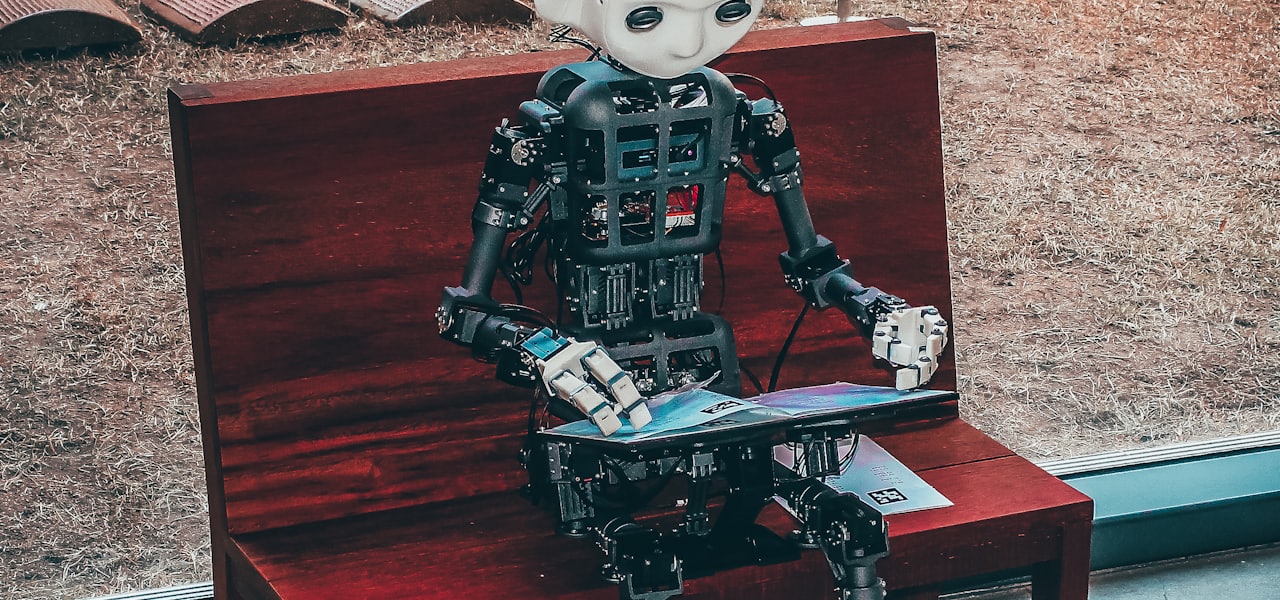
A companion robot is a robot created to create real or apparent companionship for human beings. Target markets for companion robots include the elderly and single children. Companions robots are expected to communicate with non-experts in a natural and intuitive way. They offer a variety of functions, such as monitoring the home remotely, communicating with people, or waking people up in the morning. Their aim is to perform a wide array of tasks including educational functions, home security, diary duties, entertainment and message delivery services, etc. The idea of companionship with robots has already existed on science fictions of 1970s, like R2-D2. Starting from the late 20th century, companion robots became a reality, mostly as robotic pets. Besides entertainment purposes, interactive robots were also introduced as a personal service robot for elderly care around 2000. == Characteristics == Companion robots try to interact with users. They gather information about users based on their interactions and yield feedback. This procedure varies slightly based on their specific roles. For example, social-companion robots make simple conversations, while pet-companion robots mimic being real pets. == Types == Companion robots can perform a variety of tasks and they are produced in a specialized manner according to their purpose or target audience in order to increase convenience and end user satisfaction. === Social companion robots === Social companion robots are designed to provide companionship and be a solution for unwanted solitude. They often mimic adult human, child or pet behaviours appealing to the user base. Robots which are specifically devised for simple conversations, conveying emotions and respond to user feelings fall under this category. === Assistive companion robots === Assistive companion robots are aimed at people who require constant care because of age, disability or rehabilitation purposes. Such robots can help disadvantaged users with their daily tasks, act as reminders (e.g., for regular medication) and facilitate mobility in everyday actions. Assistive companion robots reduce the intensity of labour that should be performed by caretakers, nurses and legal guardians. === Educational companion robots === Educational companion robots perform tutorship for students, regardless of their ages, and can teach desired subjects with activities tailored for the user such as interactive assignments and games. Rather than replacing teachers and instructors, educational companion robots are aides to them. === Therapeutic companion robots === Designed for individuals coping with stress (PTSD in severe cases), anxiety and loneliness; therapeutic companion robots support users' emotional and mental wellbeing. Such robots can be utilized in hospitals and care facilities as well as dwellings where the distressed user may need the most help. Therapeutic companion robots bear a vast resemblance to assistive companion robots to the extent of being a branch of them; the nuance between these two types of companion robots is that the former is for long-term/lifetime usage while the latter is mostly for the duration of the therapy received by the user. === Pet companion robots === Pet companion robots are for individuals who seek an alternative to live pets as live animals demand a considerable amount of care and may not be eligible for people with allergies. These robots aim to be perfect imitations of a pet while diminishing the chore aspect of having one. === Entertainment companion robots === Entertainment companion robots are designed solely for entertainment and can provide numerous ways of entertainment, ranging from dancing to playing games with the user. People who would appreciate an individual to have fun with are the main audience of such products. === Personal assistant robots === Personal assistant robots help people with daily tasks, management, scheduling, reminding etc. Their area of activity can be offices as well as homes and public spaces. === Sex robots === Sex robots are anthropomorphic robotic sex dolls that have human-like movement or behavior, and some degree of artificial intelligence. As of 2026, although elaborately instrumented sex dolls have been created by a number of inventors, no fully animated sex robots yet exist. Simple devices have been created which can speak, make facial expressions, or respond to touch. There is controversy as to whether developing them would be morally justifiable. In 2015, robot ethicist Kathleen Richardson called for a ban on the creation of anthropomorphic sex robots with concerns about normalizing relationships with machines and reinforcing female dehumanization. Questions about their ethics, effects, and possible legal regulations have been discussed since then. == Examples == There are several companion robot prototypes, and these include Paro, CompanionAble, and EmotiRob, among others. === Paro === Paro is a pet-type robot system developed by Japan's National Institute of Advanced Industrial Science and Technology (AIST). The robot, which looked like a small harp seal, was designed as a therapeutic tool for use in hospitals and nursing homes. The robot is programmed to cry for attention and respond to its name. Experiments showed that Paro facilitated elderly residents to communicate with each other, which led to psychological improvements. === CompanionAble === This robot is classified as an FP 7 EU project. It is built to "cooperate with Ambient Assistive Living environment". The autonomous device, which is also built to support the elderly, helps its owner interact with smart home environment as well as caregivers. The robot functions as a mobile friend, by which natural interaction is possible via speech and the touchscreen to detect and track people at home. === EmotiRob === EmotiRob is developed in a robotics project which is the continuity of the MAPH (Active Media For the Handicap) project in emotion synthesis. The aim of the project was to maintain emotional interaction with children. EmotiRob designed in a way that a child can hold it in a his/her arms and with which he/she could interact by talking to it, and then the robot would express itself through body postures or facial expressions. It has cognitive capabilities, which are further extended so that the robot can have a natural linguistic interaction with its owner through the DRAGON speech-recognition software developed by a company called NUANCE. Such interaction is expected to facilitate a child's cognitive development and develop new learning patterns. === LOVOT === Lovot is a Japanese company robot whose only purpose is "to make you happy". It features over 50 sensors that mimic the behavior of a human baby or small pet, a 360° camera with a microphone, the ability to distinguish humans from objects, neoteny eyes, and an internal warmth of 30° celsius. An interactive Lovot Café was opened in Japan October 3, 2020. === NICOBO === Nicobo was developed by Panasonic and was influenced by the loneliness of lockdowns created as a measure of the COVID-19 pandemic. It was designed to appear vulnerable, which creates empathy in its owners. Nicobo's name derives from the Japanese word for "smile". It wags its tail, engages in baby talk, and stays as a housemate. === Hyodol === Hyodol is an advanced care robot designed to support the elderly by reminding them to take their medications and monitoring their movements to keep their guardians informed. Additionally, this innovative robot can detect and respond to the emotional states of its elderly users, adding a layer of personalized care. Hyodol is designed with the appearance and speech style of a 7-year-old Korean grandchild, featuring a soft fabric exterior and user interaction methods such as striking the head or patting the back. It is equipped with various sensors and wireless communication technologies to collect and process data, supporting mobile apps and PC web monitoring systems for remote monitoring from anywhere. In South Korea, approximately 10,000 Hyodol robots are deployed to the homes of elderly individuals living alone, providing essential support and companionship. Local governments, including provincial and county offices, have embraced Hyodol as a solution to address social challenges stemming from the country's rapidly aging society.Furthermore, the robot is widely utilized in the treatment of dementia patients at a university hospital in Gangwon province. Hyodol was honored with the Mobile World Congress (MWC) Global Mobile Awards (GLOMO) in the "Best Mobile Innovation for Connected Health and Wellbeing" category on February 29, 2024. === Moxie === Moxie was a companion robot for autistic children developed by a company called Embodied. Although it had limited motion, it presented itself as a lifelike avatar. It was designed to help the children learn emotional cognition, using remotely hosted large language models to direct its respons
DreamBooth
DreamBooth is a deep learning generation model used to personalize existing text-to-image models by fine-tuning. It was developed by researchers from Google Research and Boston University in 2022. Originally developed using Google's own Imagen text-to-image model, DreamBooth implementations can be applied to other text-to-image models, where it can allow the model to generate more fine-tuned and personalized outputs after training on three to five images of a subject. == Technology == Pretrained text-to-image diffusion models, while often capable of offering a diverse range of different image output types, lack the specificity required to generate images of lesser-known subjects, and are limited in their ability to render known subjects in different situations and contexts. The methodology used to run implementations of DreamBooth involves the fine-tuning the full UNet component of the diffusion model using a few images (usually 3--5) depicting a specific subject. Images are paired with text prompts that contain the name of the class the subject belongs to, plus a unique identifier. As an example, a photograph of a [Nissan R34 GTR] car, with car being the class); a class-specific prior preservation loss is applied to encourage the model to generate diverse instances of the subject based on what the model is already trained on for the original class. Pairs of low-resolution and high-resolution images taken from the set of input images are used to fine-tune the super-resolution components, allowing the minute details of the subject to be maintained. == Usage == DreamBooth can be used to fine-tune models such as Stable Diffusion, where it may alleviate a common shortcoming of Stable Diffusion not being able to adequately generate images of specific individual people. Such a use case is quite VRAM intensive, however, and thus cost-prohibitive for hobbyist users. The Stable Diffusion adaptation of DreamBooth in particular is released as a free and open-source project based on the technology outlined by the original paper published by Ruiz et. al. in 2022. Concerns have been raised regarding the ability for bad actors to utilise DreamBooth to generate misleading images for malicious purposes, and that its open-source nature allows anyone to utilise or even make improvements to the technology. In addition, artists have expressed their apprehension regarding the ethics of using DreamBooth to train model checkpoints that are specifically aimed at imitating specific art styles associated with human artists; one such critic is Hollie Mengert, an illustrator for Disney and Penguin Random House who has had her art style trained into a checkpoint model via DreamBooth and shared online, without her consent.
Lobsang Monlam
Geshe Lobsang Monlam (Tibetan: དགེ་བཤེས་བློ་བཟང་སྨོན་ལམ, Wylie: dge bshes blo bzang smon lam), born in 1976 in Ngawa eastern Tibet, is a Tibetan Buddhist scholar and programmer who uses digital technologies to preserve the Tibetan language and culture. He is best known for developing Tibetan typefaces and for the multi-volume Great Monlam Tibetan Dictionary. In 2025, he received the Snow Lion Award for Human Rights from the International Campaign for Tibet. He is also working on developing a "Dalai Lama AI," a specialized language model. == Biography == Lobsang Monlam was born in 1976 in Ngawa, eastern Tibet, anciently Tibetan Amdo, where he became a monk at the age of 12.. At the age of 17, in 1993, Lobsang Monlam fled Tibet by crossing the Himalayas to reach southern India and discovered computer science in a monastery. In 1993, he was ordained monk in the Sera Mey College in Bylakuppe, Karnataka, India, where he obtained a Geshe title in 2013.. By the early 2000s, Lobsang Monlam had already learned to paint thangkas and to compose plans and drawings. He used this knowledge to design a new assembly hall for Sera Mey, which the monks needed. Thanks to his work, Lobsang Monlam received donations from patrons of the monastery, which he was able to use to buy his first computer. He bought his first laptop in 2002 and largely taught himself how to use the hardware and software with the help of manuals. As a Buddhist scholar, he combines meditation practice with his digital work. In 2012, he founded and directs the Monlam Tibetan Information Technology Research Center in Dharamsala, which specializes in Tibetan language and software projects. Since then, he is its director, researching Tibetan language-related software. In 2019, advised by the 14th Dalai Lama, he founded Monlam IT and Research (OPC) Private Limited. Since the 2000s, Monlam has been developing Tibetan typefaces; the first Monlam Tibetan font was created in 2005. Under his direction, the Monlam Great Tibetan Dictionary was created, comprising 223 printed volumes and over 300,000 entries; approximately 150 people worked on this project for over nine years. On May 27, 2022, the Dalai Lama inaugurated the Monlam Tibetan Dictionary, produced by the Monlam Tibetan Information Technology Research Center, at Namgyal Monastery in McLeod Ganj. According to Penpa Tsering, this is the world's largest dictionary, created with guidance from the Dalai Lama, based on proposals from Lobsang Monlam and his team under the direction of Samdhong Rinpoche, and other lamas from all schools of Tibetan Buddhism and Yungdrung Bön. On December 5, 2024, Lobsang Monlam testified at a hearing of the US Congressional-Executive Commission on China in Washington, chaired by Christopher Smith, on the difficulties of preserving the Tibetan language and culture in Tibet and the Tibetan diaspora, and on the interest of the Monlam Tibetan Informatics Research Center in developing technologies for the preservation of the Tibetan language. On December 12, 2024, the work was presented to the Library of Congress in Washington, D.C., and launched at an event. The free Monlam Great Tibetan Dictionary app is available in several languages; the German version was created in collaboration with the Tibet Institute Rikon and has been downloaded millions of times. In total, Monlam has created over 37 apps related to the Tibetan language and translation; In 2023, its center launched the Monlam artificial intelligence platform, equipped with modules for machine translation, optical character recognition, speech transcription and speech synthesis.. For their efforts, he and Sophie Richardson received the Snow Lion Award in 2025, which was presented by Richard Gere and came with a prize of €3,000. In 2019, he started a PhD at Bangalore University on Library Science. He obtained his doctorate on November 30, 2023. Currently, he spearheads Monlam AI. Lobsang Monlam is developing "Dalai Lama AI" to digitally preserve the teachings of the 14th Dalai Lama, now 90 years old, for future generations. Lobsang Monlam states, "If we succeed in preserving the Dalai Lama, we also preserve the movement."
Shane Legg
Shane Legg (born 1973 or 1974) is a machine learning researcher and entrepreneur. With Demis Hassabis and Mustafa Suleyman, he cofounded DeepMind Technologies (later bought by Google and now called Google DeepMind), and works there as the chief AGI scientist. He is also known for his academic work on artificial general intelligence, including his thesis supervised by Marcus Hutter. == Early life and education == Legg attended Rotorua Lakes High School in Rotorua, on New Zealand's North Island. He completed his undergraduate studies at Waikato University in 1996. Also in 1996, he obtained his MSc degree with a thesis entitled "Solomonoff Induction", with Cristian S. Calude at the University of Auckland. == Research interests == In the early 2000s, Legg re-introduced and popularized with Ben Goertzel the term "artificial general intelligence" (AGI), to describe an AI that can do practically any cognitive task a human can do. At that time, talking about AGI "would put you on the lunatic fringe". Legg is known for his concern of existential risk from AI, highlighted in 2011 in an interview on LessWrong and in 2023 he signed the statement on AI risk of extinction. == Career == Before his PhD and before cofounding DeepMind, Shane Legg worked at "a number of software development positions at private companies", including the "big data firm Adaptive Intelligence" and the startup WebMind founded by Ben Goertzel. === Research === Legg later obtained a PhD at the Dalle Molle Institute for Artificial Intelligence Research (IDSIA), a joint research institute of USI Università della Svizzera italiana and SUPSI. He worked on theoretical models of super intelligent machines (AIXI) with Marcus Hutter, and completed in 2008 his doctoral thesis entitled "Machine Super Intelligence". He then went on to complete a postdoctoral fellowship in finance at USI, and began a further fellowship at University College London's Gatsby Computational Neuroscience Unit. === DeepMind === Demis Hassabis and Shane Legg first met in 2009 at University College London, where Legg was a postdoctoral researcher. In 2010, Legg cofounded the start-up DeepMind Technologies along with Demis Hassabis and Mustafa Suleyman. DeepMind Technologies was bought in 2014 by Google. After the merge with Google Brain in 2023, the company is now known as Google DeepMind. According to a 2017 article, a significant part of his job as the chief scientist was to supervise recruitment, to decide where DeepMind should focus its efforts, and to lead DeepMind's AI safety work. As of July 2023, Legg works at Google DeepMind as the Chief AGI Scientist. == Awards and honors == Legg was awarded the $10,000 prize of the Singularity Institute for Artificial Intelligence for his PhD done in 2008. Legg was appointed Commander of the Order of the British Empire (CBE) in the 2019 Birthday Honours for services to the science and technology sector and to investment.
Environmental impact of AI
The environmental impact of the design, training, deployment and use of artificial intelligence includes the greenhouse gas emissions from generating electricity for data centres and computing hardware, operational and upstream water use, and material impacts from hardware manufacturing, mining and electronic waste. Estimating AI's environmental effects can be difficult because results depend on how impacts are measured, including whether accounting includes only model computation or also data-centre overhead, idle capacity, hardware manufacture, and local electricity supply. As these issues have received greater attention, governments and regulators have increasingly considered data-centre reporting requirements, energy-efficiency standards, and broader transparency measures for AI-related resource use. == Carbon footprint and energy use == AI-related energy use arises at multiple stages, including model training, fine-tuning, inference, storage, networking, and supporting infrastructure such as cooling and power conversion. === Individual level === Published estimates of energy use per AI request vary widely across models, tasks and measurement methods. A benchmark study presented at the 2024 ACM Conference on Fairness, Accountability, and Transparency found substantial differences between task types, with lower energy use for some text tasks and much higher energy use for image generation in the study's test conditions. In that benchmark, simple classification tasks consumed about 0.002–0.007 Wh per prompt on average (about 9% of a smartphone charge for 1,000 prompts), while text generation and text summarisation each used about 0.05 Wh per prompt; image generation averaged 2.91 Wh per prompt, and the least efficient image model in the study used 11.49 Wh per image (roughly equivalent to half a smartphone charge). First-party measurements in production environments have also been published. A 2025 Google study on Gemini assistant serving reported median per-prompt energy, emissions, and water-use estimates under the authors' accounting framework, while noting that different system boundaries can produce substantially different results. The study reported a median text-prompt estimate of about 0.24 Wh, which is roughly as much energy as watching nine seconds of television. The study also stated that software and infrastructure improvements reduced energy use by a factor of 33 and carbon emissions by a factor of 44 for a typical prompt over one year within the authors' framework. Researchers at the University of Michigan measured the energy consumption of various Meta Llama 3.1 models released in 2024 and found that smaller language models (8 billion parameters) use about 114 joules (0.03167 Wh) per response, while larger models (405 billion parameters) require up to 6,700 joules (1.861 Wh) per response. This corresponds to the energy needed to run a microwave oven for roughly one-tenth of a second and eight seconds, respectively. Comparisons between AI systems and human labour for specific tasks have produced mixed results and remain sensitive to assumptions about output quality, workload and system boundaries. A 2024 study in Scientific Reports reported 130 to 2900 times lower estimated carbon emissions for selected AI systems than for human writers and illustrators under its assumptions. A later Scientific Reports paper reported a counterexample for programming tasks under its assumptions, finding 5 to 19 times higher estimated emissions for the evaluated AI system than for human programmers on the benchmark used in that study. === System level === ==== Energy use and efficiency ==== AI electricity intensity depends not only on model architecture but also on hardware and facility efficiency. Data-centre operators commonly report Power usage effectiveness (PUE), which measures the ratio of total facility energy to IT equipment energy; a lower PUE indicates less overhead energy for cooling and other supporting infrastructure. Operators may also publish metrics and case studies on hardware efficiency, cooling systems and power sourcing. In its 2024 environmental report, Google stated that its 2023 total greenhouse gas emissions increased 13% year over year, primarily because of increased data-centre energy consumption and supply-chain emissions, while also reporting lower PUE than industry averages for its own facilities. The International Energy Agency has also reported that data centres remain a relatively small share of global electricity use overall, but that their local effects can be much more pronounced because demand is geographically concentrated. ==== Carbon footprint ==== At system level, AI contributes to rising electricity demand in data centres and related infrastructure. The International Energy Agency estimated that data centres used about 415 TWh of electricity in 2024, or around 1.5% of global electricity consumption, and projected that data-centre electricity use could rise to about 945 TWh by 2030, with AI identified as the main driver of that growth alongside other digital services. The carbon footprint of AI systems depends strongly on electricity sources, hardware efficiency, utilisation rates, and what stages are included in the accounting. Training large models can require substantial electricity, while total lifecycle impacts also depend on deployment scale and the amount of inference performed after training. Early analyses of frontier-model development reported rapid historical growth in training compute for selected systems, although later trends have depended on changes in model design, hardware and efficiency gains. Accounting methods that include upstream or embodied impacts, such as hardware manufacture and facilities construction, can materially affect estimates of AI-related emissions. === Decisions and strategies by individual companies === Large technology companies have reported that the expansion of AI and cloud infrastructure affects their sustainability targets, electricity demand, and resource use. Google, for example, attributed part of its emissions growth in 2023 to increased data-centre energy consumption and supply-chain emissions in its 2024 environmental report. Cloud and AI companies have also announced measures intended to reduce environmental impacts, including investment in more efficient hardware, low-carbon electricity procurement, alternative cooling systems, and water stewardship programmes. The extent, comparability, and third-party verification of such disclosures vary between firms and jurisdictions. == Water usage == Data centres can use water directly for cooling and indirectly through the water used in electricity generation, depending on the local energy mix. Public reporting on data-centre water use has often been inconsistent, making comparisons between operators and regions difficult. To standardise operational reporting, The Green Grid proposed the metric water usage effectiveness (WUE), defined as annual site water use divided by IT equipment energy use. WUE does not by itself measure local water stress, source sustainability, or all upstream water impacts. Studies of AI water use also distinguish between water withdrawal and water consumption. Research on AI-specific water use has argued that the water footprint of AI systems can be difficult to observe and may vary substantially by location, cooling design, and electricity source. A 2025 Communications of the ACM article summarised methods for estimating AI water footprints and emphasised the distinction between water withdrawal and water consumption. Li and colleagues estimated that global AI water withdrawal could reach 4.2–6.6 billion cubic metres in 2027 under the scenarios examined in their article. Using GPT-3, released by OpenAI in 2020, as an example, they estimated that training the model in Microsoft's U.S. data centres could consume about 700,000 litres of onsite water and about 5.4 million litres in total when offsite electricity-related water use was included; they also estimated that 10–50 medium-length GPT-3 responses could consume about 500 mL of water, depending on when and where the model was deployed. Published prompt-level estimates have also varied by system and accounting framework: the 2025 Google study on Gemini assistant serving reported a median text-prompt estimate of about 0.26 mL under its framework. Location can materially affect the significance of data-centre water use. Research on U.S. data centres found that one-fifth of servers' direct water footprint came from moderately to highly water-stressed watersheds, while nearly half of servers were fully or partially powered by plants located in water-stressed regions. A 2025 Reuters report, citing data from Verisk Maplecroft and NatureFinance, said that an average mid-sized data centre uses about 1.4 million litres of water per day for cooling and that Phoenix would experience a 32% increase in annual water stress if currently pl
Shakey the robot
Shakey the Robot was the first general-purpose mobile robot able to reason about its own actions. While other robots would have to be instructed on each individual step of completing a larger task, Shakey could analyze commands and break them down into basic chunks by itself. Due to its nature, the project combined research in robotics, computer vision, and natural language processing. Because of this, it was the first project that melded logical reasoning and physical action. Shakey was developed at the Artificial Intelligence Center of Stanford Research Institute (now called SRI International). Some of the most notable results of the project include the A search algorithm, the Hough transform, and the visibility graph method. == History == Shakey was developed from approximately 1966 through 1972 with Charles Rosen, Nils Nilsson and Peter Hart as project managers. Other major contributors included Alfred Brain, Sven Wahlstrom, Bertram Raphael, Richard Duda, Richard Fikes, Thomas Garvey, Helen Chan Wolf and Michael Wilber. The project was funded by the Defense Advanced Research Projects Agency (DARPA) based on a SRI proposal submitted in April 1964 for research in "Intelligent Automata", later "Intelligent Automata to Reconnaissance". It was originally designed to have two retractable arms. Now retired from active duty, Shakey is currently on view in a glass display case at the Computer History Museum in Mountain View, California. The project inspired numerous other robotics projects, most notably the Centibots. == Software == The robot's programming was primarily done in LISP. The Stanford Research Institute Problem Solver (STRIPS) planner it used was conceived as the main planning component for the software it utilized. As the first robot that was a logical, goal-based agent, Shakey experienced a limited world. A version of Shakey's world could contain a number of rooms connected by corridors, with doors and light switches available for the robot to interact with. Shakey had a short list of available actions within its planner. These actions involved traveling from one location to another, turning the light switches on and off, opening and closing the doors, climbing up and down from rigid objects, and pushing movable objects around. The STRIPS automated planner could devise a plan to enact all the available actions, even though Shakey himself did not have the capability to execute all the actions within the plan personally. An example mission for Shakey might be something like, an operator types the command "push the block off the platform" at a computer console. Shakey looks around, identifies a platform with a block on it, and locates a ramp in order to reach the platform. Shakey then pushes the ramp over to the platform, rolls up the ramp onto the platform, and pushes the block off the platform. == Hardware == Physically, the robot was particularly tall, and had an antenna for a radio link, sonar range finders, a television camera, on-board processors, and collision detection sensors ("bump detectors"). The robot's tall stature and tendency to shake resulted in its name: We worked for a month trying to find a good name for it, ranging from Greek names to whatnot, and then one of us said, 'Hey, it shakes like hell and moves around, let’s just call it Shakey.' == Research results == The development of Shakey provided far-reaching impact on the fields of robotics and artificial intelligence, as well as computer science in general. Some of the more notable results include the development of the A search algorithm, which is widely used in pathfinding and graph traversal, the process of plotting an efficiently traversable path between points; the Hough transform, which is a feature extraction technique used in image analysis, computer vision, and digital image processing; and the visibility graph method for finding Euclidean shortest paths among obstacles in the plane. == Media and awards == In 1969 the SRI published "SHAKEY: Experimentation in Robot Learning and Planning", a 24-minute video. The project then received media attention. This included an article in the New York Times on April 10, 1969. In 1970, Life referred to Shakey as the "first electronic person"; and in November 1970 National Geographic Magazine covered Shakey and the future of computers. The Association for the Advancement of Artificial Intelligence's AI Video Competition's awards are named "Shakeys" because of the significant impact of the 1969 video. Shakey was inducted into Carnegie Mellon University's Robot Hall of Fame in 2004 alongside such notables as ASIMO and C-3PO. Shakey has been honored with an IEEE Milestone in Electrical Engineering and Computing. Shakey was showcased in the BBC's Towards Tomorrow: Robot (1967) documentary.